
How to Wake Up Refreshed and Sleep Better Every Night
Waking up should not feel like recovering from a minor car accident. Yet plenty of people open their eyes with a headache, dry mouth, stiff neck, aching back, heavy limbs and the powerful urge to stay in bed for another two hours. Sometimes the explanation is obvious: they went to bed too late, trained hard the previous day, stacked three pillows under their head or spent half the night scrolling through their phone. Other mornings are harder to explain because the person technically slept, but the sleep did not feel restorative.
Feeling better in the morning is not just about finding one perfect pillow, buying a sleep-tracking watch or drinking a special nighttime tea. Restful sleep depends on several systems working together: adequate sleep duration, a stable circadian rhythm, a comfortable environment, uninterrupted breathing, sensible food and caffeine timing, physical recovery and a morning routine that helps the brain transition into wakefulness. Improving any one of these may help, but the biggest improvements usually come from fixing several small problems at once.
There is also an uncomfortable truth that needs to be stated clearly: five or six hours of high-quality sleep is generally better than five or six hours of fragmented sleep, but it is not equivalent to getting enough sleep. The CDC recommends that adults obtain at least seven hours of sleep per day, and individual needs can be higher. Sleep habits can help you make the most of a short night, but they cannot permanently outsmart sleep deprivation.
Quick Answer: The Foundations of Waking Up Refreshed
For most people, the biggest improvements come from consistently doing the following:
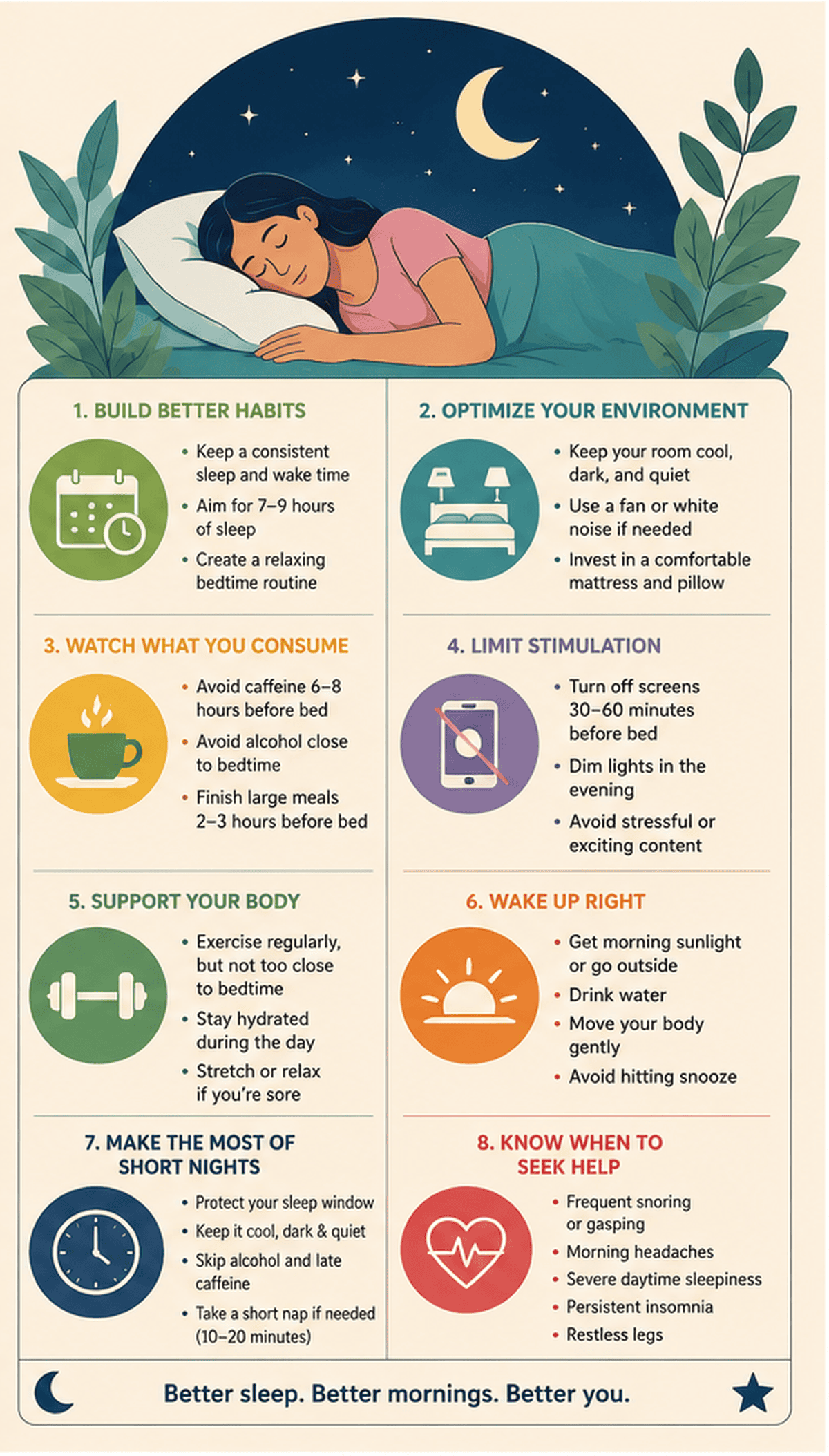
- Allow at least seven hours for sleep whenever realistically possible.
- Keep approximately the same wake-up time every day.
- Make the bedroom cool, dark, quiet and physically comfortable.
- Stop caffeine early enough that it is no longer affecting bedtime.
- Finish large meals and alcohol several hours before going to sleep.
- Reduce bright light, stimulating content and unnecessary phone use before bed.
- Use a pillow height that keeps the head and neck reasonably aligned.
- Get outdoor light and gentle movement shortly after waking.
- Investigate persistent snoring, gasping, morning headaches or severe daytime sleepiness.
These steps are not glamorous, but they address the causes of poor mornings more effectively than most expensive sleep gadgets.
Why You Can Sleep All Night and Still Feel Terrible
A rough morning does not always mean that the entire night was wasted. Immediately after awakening, the brain passes through a transitional period called sleep inertia. During this period, alertness, reaction time and mental performance may temporarily be reduced, especially when someone wakes abruptly from deeper sleep or is already sleep deprived. A degree of grogginess can therefore be normal, but routinely feeling incapacitated for a large part of the morning deserves closer attention.
Several other issues may pile on top of sleep inertia. A poorly positioned pillow can leave the neck muscles strained. A hard gym session can produce delayed-onset muscle soreness, commonly called DOMS, that is most noticeable the next morning. Alcohol may make someone fall asleep quickly but produce lighter, more disrupted sleep later in the night, while late caffeine can reduce sleep even when the person believes it no longer affects them.
Morning headaches have many possible explanations, including dehydration, teeth grinding, migraine, medication effects and sleep-disordered breathing. Dehydration may cause or aggravate headaches, but it should not automatically be blamed for every morning headache. Frequent headaches combined with loud snoring, breathing pauses, gasping or significant daytime sleepiness may warrant an assessment for obstructive sleep apnea.
Start With Enough Time in Bed
The most effective sleep improvement is often the least exciting: creating a realistic sleep window. If you must wake at 6:30 a.m., going to bed at midnight does not provide six and a half hours of sleep. It provides six and a half hours in bed, from which you must subtract the time required to fall asleep and any periods spent awake during the night.
Work backward from the wake-up time rather than waiting until you happen to feel exhausted. Someone aiming for seven and a half hours of actual sleep might need approximately eight hours in bed, depending on how quickly that person falls asleep and how often they wake. This does not need to be calculated with obsessive precision; the purpose is simply to stop pretending that a six-hour opportunity will somehow produce eight hours of recovery.
Consistency matters alongside duration. Going to sleep and waking at similar times helps stabilize the circadian rhythm—the body’s roughly 24-hour timing system that influences sleepiness, alertness, temperature and hormone release. A wildly different weekend schedule can make Monday morning feel like a miniature case of jet lag, even when the total weekend sleep time was long.
Build a Bedroom That Does Not Fight Your Sleep
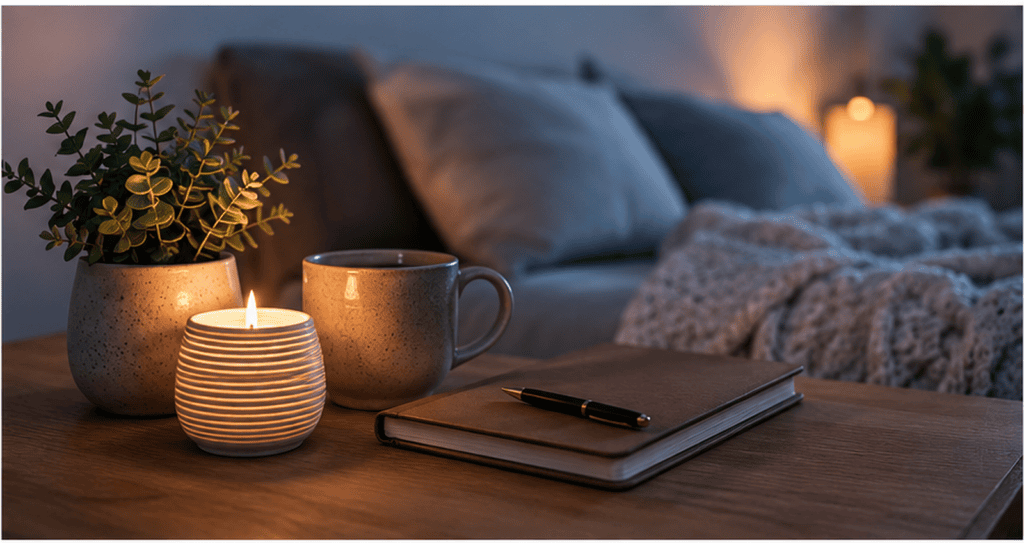
The standard recommendation to keep a bedroom cool, dark and quiet sounds almost too basic, but each element removes a potential source of fragmented sleep. Blackout curtains, covered indicator lights, a comfortable eye mask and a quieter phone setting may help more than adding another supplement. The room should feel cool enough for comfort without becoming so cold that muscles tense or the person repeatedly wakes to adjust the blankets.
A fan can be an excellent part of this setup. It provides airflow, a slight cooling effect and a consistent background sound that may mask traffic, voices or household noise. However, a fan circulating air inside a closed room is not necessarily bringing in “fresh air” unless the room also has ventilation or an open window. Keep the fan reasonably clean so that it is not blowing accumulated dust around the room, and reposition it if direct airflow causes dry eyes, a dry throat or discomfort.
White noise is useful when the alternative is unpredictable noise, but it does not need to be loud. The goal is to soften sudden sound changes, not overpower the room. A fan, air purifier or dedicated noise machine can perform the same basic function without leaving a television playing all night.
Fix the Pillow Before Buying a New Mattress
Waking with a kinked neck is often a mechanical problem rather than a mysterious sleep problem. The pillow’s main job is to support the head while allowing the neck to remain relatively neutral. Too many pillows can push the head forward when sleeping on the back, while an excessively tall or thin pillow can bend the neck sideways during side sleeping.
There is no universal pillow height because shoulder width, body size, sleep position, mattress firmness and pillow compression all matter. Research suggests that pillow design and appropriate support can affect waking neck symptoms, although there is not one proven pillow that is best for everyone. The useful test is whether the nose, chin and breastbone remain reasonably aligned rather than the head being sharply tilted or rotated.
Start by simplifying. Try one supportive pillow rather than stacking several soft ones, and give the arrangement a few nights unless it clearly causes pain. Side sleepers often need enough height to fill the space between the shoulder and head, while back sleepers usually need less height. Stomach sleeping forces the neck to remain turned for long periods and may aggravate some people’s neck discomfort.
A pillow between the knees can also make side sleeping more comfortable, while a pillow under the knees may reduce strain for some back sleepers. These are comfort experiments, not medical treatments. Persistent neck pain, numbness, arm weakness, tingling or pain following an injury should be assessed rather than repeatedly treated by purchasing new pillows.
Use a Three-Hour Bedtime Runway
A good night begins before the head touches the pillow. Treat the final two or three hours of the evening as a gradual landing rather than going directly from work, food, bright lights and intense entertainment into bed. You do not need a complicated wellness ritual, but the nervous system benefits from predictable signals that the active part of the day is ending.
Time Caffeine According to Your Sensitivity
Caffeine blocks adenosine, one of the chemical signals involved in building sleep pressure. Its half-life is commonly around five or six hours, although metabolism varies considerably between people. Research has found that caffeine consumed even six hours before bedtime can measurably disrupt sleep, so “I can fall asleep after coffee” does not necessarily prove that sleep quality is unaffected.
A practical starting point is to stop caffeine at least six to eight hours before bed. Someone who is highly sensitive, has insomnia or drinks large doses may need an earlier cutoff. Remember that caffeine is also found in energy drinks, pre-workout powders, tea, cola, chocolate and some headache medications.
Finish Large Meals Before Bed
It is generally sensible to finish a heavy, spicy or very large meal two or three hours before lying down. This gives digestion time to progress and may reduce discomfort, reflux and repeated waking. Both the CDC and NHLBI recommend avoiding large meals close to bedtime.
That does not mean everyone must go to bed hungry. Hunger can also be distracting, especially after training or an unusually active day. A small, familiar snack is different from a large takeout meal, and people with diabetes, reflux or other medical conditions may need individualized advice about meal timing.
Do Not Use Alcohol as a Sleep Aid
Alcohol can shorten the time it takes to fall asleep, which makes it feel effective. The trade-off is that sleep later in the night may become lighter and more fragmented, increasing the likelihood of waking and feeling unrefreshed. It can also worsen snoring and breathing problems in susceptible people.
Arrive Hydrated Without Flooding Yourself
Going to bed dehydrated may contribute to thirst, dry mouth or headache, but drinking a litre of water immediately before bed creates a different problem: repeated bathroom trips. Hydrate steadily during the day and drink according to thirst in the evening rather than trying to repair the entire day’s fluid intake at bedtime. Urine that is extremely dark, intense thirst, dizziness or a dry mouth may suggest that more regular daytime hydration is needed.
Screens Matter, but It Is Not Only About Blue Light
Putting the phone away before bed remains good advice, but “blue light” is only part of the story. Bright evening light can delay circadian timing and interfere with the body’s transition toward sleep. At the same time, the content on the screen may be equally disruptive: stressful news, arguments, games, work messages and endless short videos keep the brain engaged and make a planned five-minute check turn into an extra hour awake.
The CDC recommends turning off electronic devices at least 30 minutes before bedtime. For someone struggling with sleep, a 30- to 60-minute screen-free period is a reasonable experiment. Lowering brightness, using warmer display settings and avoiding emotionally stimulating material may help when complete avoidance is unrealistic, but a night-mode filter is not permission to scroll until 2 a.m.
Blue-light-blocking glasses are not a guaranteed solution. Research on their sleep benefits is mixed, and a Cochrane review found that blue-light-filtering lenses may make little or no difference to sleep quality for many users. The more dependable strategy is to lower overall evening light, stop delaying bedtime and replace stimulating screen use with something quieter.
Give the Brain a Repeatable Shutdown Routine
A bedtime routine works best when it is simple enough to repeat. Dim the lights, complete basic hygiene, set out what you need for morning and choose one calm activity such as reading, light stretching, quiet music or breathing exercises. A warm shower or bath may also serve as a useful transition into sleep. NHLBI includes relaxation techniques and a warm bath among its recommended healthy sleep habits.
People who lie in bed mentally reviewing unfinished work may benefit from writing a brief list before bed. Record tomorrow’s important tasks, anything you are afraid of forgetting and the first action you will take in the morning. The objective is not to solve your life at midnight; it is to convince the brain that the information has been safely stored somewhere.
Keep work and intense problem-solving out of bed when possible. For people with persistent insomnia, cognitive behavioural therapy for insomnia, or CBT-I, uses methods such as stimulus control to rebuild the connection between bed and sleep. CBT-I is a structured treatment rather than just a collection of relaxation tips and is worth discussing with a healthcare professional when insomnia becomes chronic.
Account for Training and Physical Recovery
Regular physical activity generally supports better sleep, but a hard workout can also leave the body sore the following morning. Delayed-onset muscle soreness commonly develops after unfamiliar or demanding exercise, especially when the workout contains a large amount of eccentric loading, such as lowering weights or walking downhill. Sleep will not necessarily erase that soreness overnight.
After demanding training, cool down, eat normally, replace fluids and avoid turning every workout into a maximum-effort test. Gentle walking and comfortable mobility work may reduce the feeling of being completely seized up the next morning. Aggressively stretching a painful neck or forcing a sore joint through sharp pain is not the same as useful recovery.
Workout timing is individual. Some people sleep well after evening exercise, while others remain hot and alert for several hours. If late training repeatedly delays sleep, move the hardest part of the session earlier or leave a longer cooling-down period before bed. The workout that theoretically improves fitness is not helping much if it regularly cuts two hours from the night.
A Better Way to Wake Up
The first few minutes after waking can determine whether ordinary sleep inertia fades or turns into a sluggish two-hour morning. Place the alarm far enough away that you must deliberately reach or stand to turn it off. Choose a realistic alarm time instead of setting an unrealistically early alarm and planning to negotiate with it repeatedly.
Evidence on snoozing is mixed. One small study found that repeated alarms prolonged light sleep and sleep inertia, while another study involving habitual snoozers found that a brief snooze period did not meaningfully harm sleep and sometimes improved immediate cognitive performance. Instead of treating snoozing as universally good or bad, look at the outcome: if repeated alarms leave you late, anxious and foggier, use one alarm and protect an earlier bedtime.
Expose yourself to bright light soon after waking, preferably by opening the curtains and going outside. Morning light helps signal daytime to the circadian system, while bright light late in the evening tends to push the body clock later. A brief outdoor walk combines light, movement and a clear psychological break from the bed.
Drink some water if you are thirsty, then perform a few minutes of easy movement. Shoulder circles, a gentle walk, slow bodyweight squats or comfortable spinal movements may be enough to reduce stiffness without turning the morning into a full workout. Avoid forcefully cranking a painful neck from side to side.
There is no strong rule requiring everyone to delay morning coffee by exactly 90 minutes. That popular recommendation is often presented with more certainty than the evidence supports. The more important caffeine decisions are the total dose, how it affects you and whether afternoon consumption interferes with the next night’s sleep.
The Five- or Six-Hour Emergency Protocol
Occasional short nights happen. A child wakes up, work runs late, travel disrupts the schedule or life simply refuses to cooperate. When only five or six hours are available, the goal is damage control—not pretending the short night is optimal.
For a short night:
- Protect the entire available sleep window instead of spending its first hour on the phone.
- Avoid alcohol and late caffeine, both of which can further reduce sleep quality.
- Prepare the room before bed so temperature, noise and light do not need to be fixed at midnight.
- Use one comfortable pillow arrangement rather than experimenting when exhausted.
- Get morning light and movement, but do not mistake temporary alertness for complete recovery.
- Use caffeine moderately rather than repeatedly escalating the dose throughout the day.
- Consider a brief nap of approximately 10 to 20 minutes early in the afternoon if needed.
- Recover by returning to an earlier bedtime instead of repeating the short night.
Brief naps may improve alertness while reducing the chance of waking from deeper sleep, although sleep inertia can still occur. Allow yourself time to become fully alert after any nap, especially before driving, climbing, operating equipment or doing safety-sensitive work.
No combination of cold showers, energy drinks, loud music or motivational speeches makes severely sleepy driving safe. If you are struggling to keep your eyes open, drifting from your lane or missing sections of the drive, stop treating it as a discipline problem. Fatigue impairs reaction time and decision-making, and the responsible response is to stop and rest.
Try This Seven-Day Sleep Reset
A week will not solve every sleep problem, but it is long enough to reveal whether basic habits are moving in the right direction.
For seven days:
- Choose one consistent wake-up time and stay close to it.
- Give yourself at least seven to eight hours in bed.
- Stop caffeine eight hours before bedtime.
- Finish large meals at least two to three hours before bed.
- Put the phone away 30 to 60 minutes before sleep.
- Keep the room cool, dark and quiet.
- Use one pillow setup that keeps the neck comfortable.
- Get outside shortly after waking.
- Record how you feel each morning from one to ten.
Also record alcohol, unusually hard workouts, late meals, nighttime awakenings and headaches. This simple sleep diary may reveal that the “random” bad mornings consistently follow late caffeine, weekend schedule changes, alcohol, heavy training or a particular pillow arrangement. Change one major variable at a time when possible so you can identify what actually helps.
Consumer wearables can provide useful trends, but their sleep-stage estimates should not be treated like a medical sleep study. Pay more attention to bedtime, wake time, awakenings, resting heart rate trends and how you function during the day than to whether an app claims you missed nine minutes of deep sleep. A device should help you make decisions, not give you another source of bedtime anxiety.
When Poor Mornings Need Medical Attention
Occasionally waking tired is normal. Regularly waking exhausted despite allowing enough time for sleep is different. Speak with a healthcare professional when poor sleep is persistent, interferes with work or driving, or continues despite reasonable changes to the schedule and environment.
Warning signs worth discussing include:
- Frequent loud snoring
- Gasping, choking or witnessed pauses in breathing
- Repeated morning headaches
- Severe daytime sleepiness
- Falling asleep unintentionally
- Persistent difficulty falling or staying asleep
- Restless or uncomfortable legs at night
- Frequent nighttime urination
- Jaw pain or signs of teeth grinding
- Ongoing neck pain, numbness, tingling or weakness
Sleep apnea can cause repeated breathing interruptions and may leave a person sleepy even after what appears to be a full night in bed. It is treatable, but it cannot be corrected by buying a better fan or using a sleep app. NHLBI recommends discussing symptoms such as excessive daytime sleepiness, loud snoring and breathing interruptions with a healthcare provider.
A new headache that is sudden and severe, follows a head injury or occurs with confusion, weakness, numbness, fainting, fever, vision changes or difficulty speaking requires prompt medical assessment. Persistent morning headaches should also be evaluated instead of being automatically attributed to dehydration.
The Bottom Line
Waking up refreshed is usually not the result of one perfect night. It is the result of repeatedly giving the body enough time, keeping the internal clock stable, reducing disruptions and fixing physical problems that make sleep uncomfortable. A cool room, a clean fan, one properly sized pillow, earlier caffeine cutoff, sensible meal timing and a phone-free wind-down period can collectively make a substantial difference.
When a short night is unavoidable, make the available sleep as quiet, dark and uninterrupted as possible, then use light, gentle movement and moderate caffeine to manage the next day. But do not normalize permanent five-hour nights or convince yourself that excellent sleep hygiene cancels insufficient sleep. Quality matters, timing matters and environment matters—but duration still matters too.
The real goal is not to construct an elaborate nighttime ritual that becomes another obligation. It is to remove the habits and conditions that are making sleep harder than it needs to be. Do that consistently, and waking up can begin to feel less like dragging yourself from a wreck and more like starting the day with a body that has actually recovered.
- CDC: About Sleep — Learn how much sleep adults need and review the CDC’s core recommendations for healthier sleep habits.
- NHLBI: Healthy Sleep Habits — Find practical guidance from the National Heart, Lung, and Blood Institute on schedules, caffeine, light, exercise and bedroom conditions.
The most important tips from my perspective include: less pillows the better, completely dark room, uninterrupted sleep, no food before bed and no screens before bed. Ideally your bed time should be consistent. Also I like to visualize the next day going completely the exact way I want it before bed as I drift off. Also think about any problems before bed that way your subconscious can brainstorm solutions for you while you sleep 😴