
Fish Oil, Turmeric, Collagen and More: What Actually Helps Workout Recovery?
After a hard week of training, lifting, physical work, moving furniture, or simply doing more than your body is used to, it is natural to start looking for something that might help you recover faster. That is when the supplement aisle starts looking pretty tempting.
Fish oil for joints. Turmeric for inflammation. Collagen for tendons, skin, and “anti-aging.” Creatine for strength. Protein powder for muscle repair. Magnesium for cramps. Before long, it is easy to convince yourself that you need a cabinet full of capsules, powders, gummies, and expensive mystery blends just to feel normal again.
The truth is less exciting, but much more useful: a few supplements can be worthwhile for the right person, but none of them can replace sleep, enough food, enough protein, hydration, sensible training, and giving irritated joints or tendons time to settle down. Recovery is not one magic pill. It is a stack of boring basics done consistently.
This guide looks at the most common recovery supplements honestly: what they may help with, what they probably will not do, and where your money is better spent first.
Quick Answer: What Actually Helps Most?
For most people, the biggest recovery wins are still the basics:
- Eating enough food after hard training or physical work.
- Getting enough protein across the day.
- Including carbohydrates when you have trained hard or been very active.
- Drinking enough fluids.
- Sleeping properly.
- Taking lighter days before a small irritation becomes a bigger problem.
- Building activity up gradually instead of going from “not much” to four hard days in a row.
Protein is usually the most practical supplement for recovery if you struggle to eat enough protein from food. Creatine can be useful for people doing regular strength training. Fish oil, turmeric, and collagen may have a place for some people, but they are not fast fixes for a sore elbow, wrist, knee, or back.
The big mindset shift is this: supplements should support a solid recovery plan. They should not become an excuse to ignore pain, overtrain, under-eat, or sleep badly.
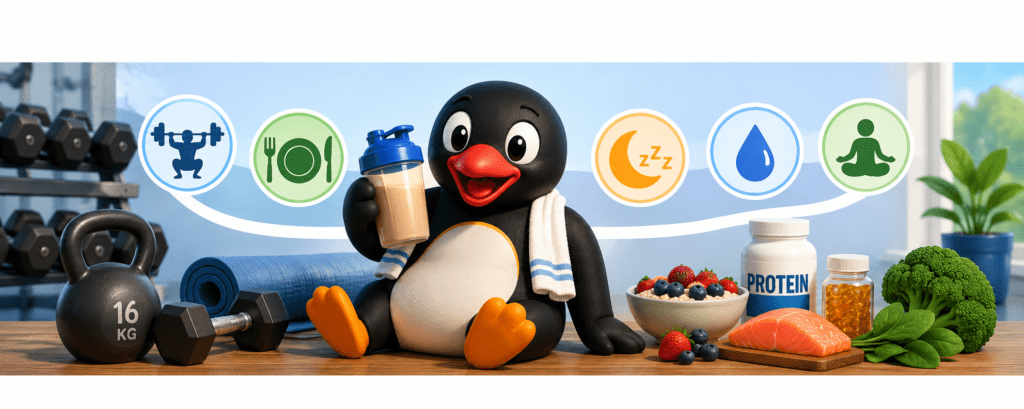
Recovery Starts Before You Open a Supplement Bottle
A tough workout or a physically demanding day puts stress on muscles, connective tissue, and your nervous system. Your body needs time and resources to adapt.
That means recovery starts with the food on your plate, the water you drink, how much sleep you get, and whether you are willing to take an easier day when your form is falling apart. A scoop of collagen cannot undo three nights of terrible sleep. Fish oil cannot fix a tendon that keeps getting irritated because you are lifting through sharp pain. Turmeric cannot make up for barely eating after a long day of hard physical work.
This does not mean supplements are useless. It means they belong near the top of the pyramid, not at the bottom.
Think of recovery in this order:
- Training and workload: Do not keep piling hard workouts on top of exhausting physical labour without adjusting something.
- Food and protein: Your body needs energy and raw materials to rebuild.
- Hydration and sleep: Recovery gets harder when you are dehydrated and running on poor sleep.
- Movement and mobility: Light movement can often help stiffness better than total inactivity.
- Supplements: Useful in some cases, but never the foundation.
Fish Oil: Not Joint Lubricant, but Still Worth Understanding
The fish oil idea makes perfect sense at first. Oil lubricates an engine, so fish oil must lubricate your joints, right?
Not really.
Fish oil does not coat your joints, refill cartilage, or create a slippery layer inside your elbows and knees. Your body does not work like a car engine. Omega-3 fats from fish oil—mainly EPA and DHA—are incorporated into cell membranes and can influence chemical signalling in the body. That is different from physically lubricating a joint.
Omega-3s are important nutrients, and eating fish can be a healthy part of an overall diet. But fish oil should not be viewed as an instant solution for workout soreness, tendon irritation, or suspected arthritis.
Can Fish Oil Help With Joint Pain?
There is some evidence that omega-3 supplements may help people with rheumatoid arthritis as part of standard medical care, but that does not mean fish oil is proven to fix ordinary gym aches, sore wrists from moving boxes, or elbow pain from gripping tools.
That difference matters. Rheumatoid arthritis is an inflammatory autoimmune condition. A sore elbow after hauling furniture is usually a workload and recovery problem first.
Fish oil may still be reasonable for people who rarely eat fatty fish and want another source of omega-3s. But it is better viewed as a general nutrition decision than a “joint lubricant” supplement.
What About Fish Oil and the Brain?
This is one of the more interesting parts of omega-3 nutrition. DHA is an important component of brain-cell membranes, which is why omega-3s are often discussed in connection with brain health. But that does not mean taking fish oil automatically makes a healthy person sharper, more focused, or protected from cognitive decline.
Research on fish intake, omega-3s, and brain health is complicated. Some observational studies have found associations between higher fish intake and better cognitive outcomes, but clinical trials have not consistently shown that omega-3 supplements improve cognitive function in healthy older adults.
So the sensible conclusion is not “fish oil is useless.” It is that fish, seafood, and omega-3-rich foods can fit into a healthy diet, while fish oil capsules should not be sold as a guaranteed brain upgrade.
Fish Oil Safety Notes
Fish oil is usually well tolerated, but it can cause burps, heartburn, stomach upset, or diarrhea for some people. More importantly, higher doses can interact with blood-thinning medications, including warfarin and other anticoagulants.
Talk to a pharmacist or healthcare professional before taking fish oil if you:
- Use blood thinners or anticoagulant medication.
- Have a bleeding disorder.
- Have surgery or dental work coming up.
- Take several medications and are unsure about interactions.
- Plan to take high doses instead of following the label.
Turmeric and Curcumin: Promising, but Not a Miracle Anti-Inflammatory
Turmeric is the bright yellow spice used in many curries and traditional dishes. Curcumin is one of turmeric’s most studied compounds and is often sold in concentrated capsules or powders.
It is understandable why turmeric became popular in fitness and wellness circles. Lab research suggests curcumin has antioxidant and anti-inflammatory properties. That sounds perfect for post-workout soreness, joint stiffness, and physical recovery.
But there is an important gap between “has interesting properties in a lab” and “will noticeably fix your sore elbow after a hard week.”
Can Turmeric Help Recovery?
Turmeric may be worth experimenting with for some people, especially as a food ingredient. Adding turmeric to soups, rice, eggs, roasted vegetables, or a homemade spice blend is simple, inexpensive, and does not require expecting miracles.
Supplement capsules are more complicated. Current evidence is not strong enough to say that turmeric supplements reliably treat musculoskeletal pain or inflammation for everyone.
That does not mean your turmeric capsules are doing nothing. It means you should be honest about the uncertainty. If you feel better, that may be useful information for you personally. But do not assume turmeric is fixing an injury or making it safe to keep training through sharp pain.
A Smart Approach to Turmeric
A practical approach is to keep turmeric in the “optional support” category.
Use it because you enjoy it, because it works well in your food, or because you have tried a reasonable product and feel it helps. Do not use it as a substitute for seeing someone about persistent pain, swelling, numbness, or loss of strength.
Also be cautious with high-dose or enhanced-absorption curcumin products. Standard turmeric products can cause stomach upset, nausea, reflux, diarrhea, or constipation. More concentrated products designed to increase absorption have been associated with liver injury in some people.
Stop taking turmeric or curcumin and get medical advice if you develop symptoms such as unusual fatigue, dark urine, yellowing of the skin or eyes, poor appetite, or persistent nausea.
Collagen: Not Just for Skin, but Not a Magic Tendon Fix Either
Collagen has become one of the biggest names in the supplement world. It is often marketed toward beauty, skin elasticity, hair, nails, joint comfort, and anti-aging. That can make active people overlook it as a possible recovery supplement.
Collagen is a structural protein found throughout the body. It is involved in tissues such as skin, tendons, ligaments, cartilage, bones, and muscles. So the idea that collagen could matter for connective tissue is not ridiculous at all.
The key is keeping expectations realistic.
What Collagen May Help With
Some research suggests collagen peptides, especially when combined with regular resistance training or rehabilitation exercise, may support aspects of connective-tissue health, tendon structure, or joint function. A 2024 systematic review and meta-analysis found potentially positive effects when collagen peptides were paired with long-term training, but the certainty of the evidence ranged from low to moderate.
That is promising, but it is not a licence to ignore pain.
Collagen is most interesting for someone who is already doing the boring but important work: gradually strengthening a sore tendon, following physiotherapy advice, training consistently, eating enough protein, and avoiding the movements that repeatedly flare the problem up.
What Collagen Will Not Do
Collagen will not instantly rebuild cartilage. It will not erase a tendon problem caused by too much gripping or too much lifting. It will not tighten loose skin overnight. And it should not replace your main protein sources.
For muscle recovery and muscle-building, complete protein sources such as dairy, eggs, meat, fish, soy, beans, lentils, Greek yogurt, and whey protein are generally more useful. Collagen can be an optional add-on, but it should not become your primary protein strategy.
Protein Powder: The Most Practical Recovery Supplement
Protein powder is not glamorous, but it is often the most useful supplement in the whole category.
Your body uses dietary protein to provide amino acids, the building blocks involved in muscle repair and adaptation. People who train regularly often benefit from paying attention to their total daily protein, not just whether they had a shake immediately after a workout.
A commonly cited range for exercising adults is roughly 1.4 to 2.0 grams of protein per kilogram of body weight per day, though exact needs vary with body size, training goals, calorie intake, age, and health status.
That does not mean everyone needs to obsessively weigh chicken breasts or track every gram forever. It means many active people do better when they make protein a deliberate part of each meal.
Easy Protein Options for Recovery
A protein shake can help, but it is not required. Useful options include:
- Greek yogurt with berries and oats.
- Eggs with toast and fruit.
- Chicken, turkey, fish, tofu, beans, or lentils with rice or potatoes.
- Cottage cheese with fruit.
- A whey or plant-protein shake when you are busy.
- Leftovers from a protein-focused supper.
- Hummus, pita, and another protein source such as yogurt, cheese, eggs, or chicken.
The best protein supplement is usually the one that helps you hit your daily needs without turning eating into a complicated chore.
Creatine: Great for Training Performance, Not a Joint Supplement
Creatine is one of the most researched supplements in strength and fitness. It is especially useful for activities involving short, hard bursts of effort with brief recovery periods, such as weight training, sprinting, and repeated high-intensity exercise.
Creatine is not an anti-inflammatory supplement. It is not a tendon supplement. It is not a cure for soreness.
But it can still support recovery indirectly by helping you train with more quality over time. If you can perform a few more solid reps, maintain strength better, or recover between high-intensity sets more effectively, that can add up over months of training.
Creatine monohydrate is the form with the strongest research history. Some people notice a small increase on the scale because creatine increases water stored in muscle. That is not the same as gaining body fat.
Creatine makes the most sense for people who are actually doing regular resistance training. It is not necessary for someone who is taking long breaks from the gym, barely eating, sleeping poorly, and hoping one scoop will transform their recovery.
What About Magnesium, BCAAs, and “Recovery Blends”?
Magnesium is often sold as a solution for cramps, sleep, stress, soreness, and recovery. It is an important mineral, but it is not a universal answer to every muscle issue. If your diet is low in magnesium-rich foods or you have been told by a healthcare professional that your intake is low, it may be worth discussing. But buying magnesium because your forearms are sore after moving furniture is not automatically the best move.
BCAAs are another common product. For many people who already eat enough complete protein, BCAA supplements are probably unnecessary. A normal protein shake, meal with protein, or Greek yogurt often gives you more value for the money.
Be especially skeptical of expensive “recovery blends” with twenty ingredients and vague proprietary amounts. If a label does not tell you how much of each ingredient you are getting, it is difficult to know what you are paying for.
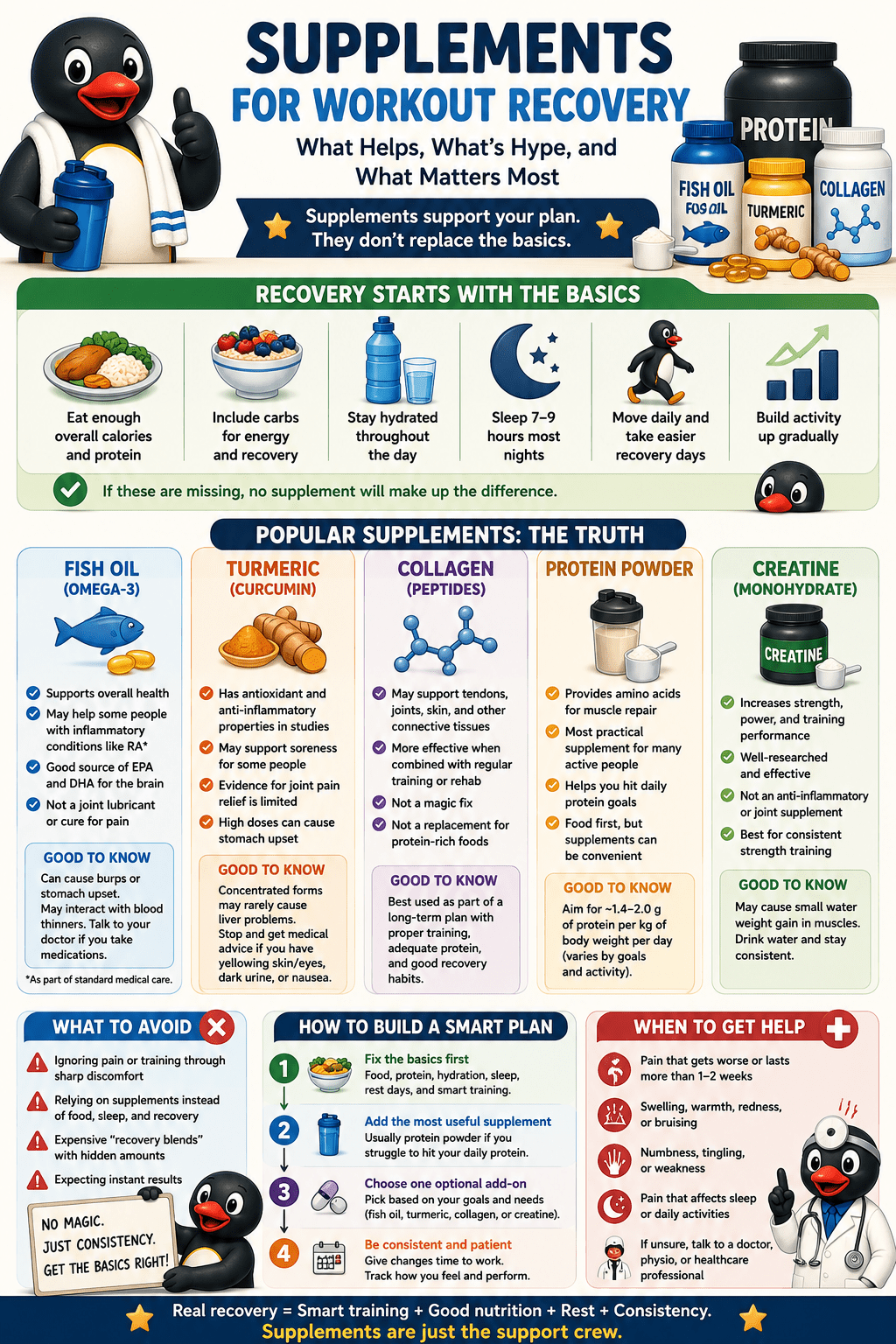
How to Build a Smarter Supplement Plan
You do not need to start everything at once. In fact, that is one of the fastest ways to waste money and have no idea what is helping.
Try this simple order.
Level One: Fix the Basics First
Before buying more supplements, make sure you are:
- Eating enough total food after hard activity.
- Getting protein at two to four meals or snacks.
- Drinking water consistently.
- Sleeping enough most nights.
- Taking at least one easier day when soreness is piling up.
- Adjusting training when a specific movement causes sharp or worsening pain.
Level Two: Add the Most Useful Supplement
For most active people, this is protein powder if food alone is not getting the job done.
A simple shake can be useful after training, during a busy workday, or when you need something easy before bed. It is not “fake food.” It is simply a convenient protein source.
Level Three: Choose One Optional Add-On
Choose based on your real goal, not marketing.
- Fish oil: Consider it for general omega-3 intake if you rarely eat fatty fish, not as a joint lubricant.
- Turmeric: Consider it as an optional food-based or short-term supplement experiment, while being careful with high-dose formulations and medications.
- Collagen: Consider it if you are focused on long-term tendon, joint, or connective-tissue support alongside proper training.
- Creatine: Consider it if you train consistently for strength, muscle, or repeated high-intensity performance.
Give one change time. Do not start fish oil, collagen, turmeric, creatine, magnesium, and a pre-workout all on the same Monday and then try to figure out what made your stomach upset.
Buying Supplements More Safely in Canada
A supplement does not need to be expensive to be useful, but it should be clearly labelled.
In Canada, look for an eight-digit Natural Product Number, or NPN, on applicable natural health product labels. This means the product has been licensed by Health Canada for sale under its labelled conditions of use.
That is not a guarantee that every marketing promise is exciting or that the supplement is necessary for you. It is simply a better starting point than buying an unlabelled miracle powder from a random social media ad.
Also avoid buying recovery products that promise to cure arthritis, rebuild cartilage instantly, erase pain overnight, or replace sleep and proper training. The more dramatic the claim, the more skeptical you should become.
The Bottom Line
Fish oil, turmeric, collagen, protein powder, and creatine all have different roles. The problem is that they are often marketed as though they all do the same thing: fix soreness, protect joints, and make recovery effortless.
They do not.
Protein is usually the most practical recovery supplement. Creatine is useful for consistent strength training. Fish oil can support overall nutrition, but it does not lubricate joints. Turmeric is interesting, but not a proven cure for inflammation or joint pain. Collagen may have a role in long-term connective-tissue support when paired with proper training, but it is not a shortcut around an irritated tendon or overloaded joint.
Build your recovery around food, sleep, hydration, gradual training, and listening when your body is giving you useful information. Then use supplements strategically instead of emotionally.
Related External Links
- NIH Office of Dietary Supplements: Omega-3 Fatty Acids — A practical overview of omega-3s, food sources, possible benefits, side effects, and medication interactions.
- National Center for Complementary and Integrative Health: Turmeric — Evidence-based information on turmeric and curcumin, including safety concerns with concentrated products.
I like the idea of picking only one supplement for your needs. So for example I didn’t sleep well last night and am getting cramps today I will take magnesium. Tomorrow I don’t feel very mentally sharp I will take a fish oil. The following day I’m feeling very sore after a hard workout I will take 2 turmeric pills. This way you aren’t breaking the bank and the placebo of taking just the one supplement at a time can have a greater effect.