
Lymph Node Massage and Pressure Points: What Helps, What Does Not, and How to Relax Safely
A massage video can be strangely hypnotic. You see someone working across a person’s back while an infrared-style image shows warm colours spreading through the muscles. Little numbered dots may appear over the shoulders, neck, hands, or feet. It is easy to come away thinking that massage is “releasing toxins,” activating lymph nodes, or unlocking hidden pressure points all over the body.
Some of that idea is useful. Massage, warmth, movement, and calming routines can absolutely help people feel less tense, more comfortable, and more connected to their bodies. But the internet tends to mix real anatomy with big wellness claims. Lymph nodes are not tiny toxin-storage bags that need to be squeezed out, and a sore spot in your shoulder is not necessarily a blocked energy channel or a medical problem.
The better approach is to understand what each tool is actually for. Once you know the difference between lymph nodes, muscle trigger points, acupressure, acupuncture, and ordinary relaxation, you can build a safer and more useful recovery routine.
Quick Answer: What Is Actually Worth Knowing?
Lymph nodes, massage, and pressure points all get grouped together online, but they are not the same thing.
- Lymph nodes are part of your immune and fluid-management system. They filter lymphatic fluid and help your body respond to infections and disease.
- You do not need to deeply massage healthy lymph nodes to “remove toxins.”
- Manual lymphatic drainage is a real, gentle technique used in specific medical situations, especially lymphedema, and is best taught by a qualified professional.
- Massage can help with relaxation, muscle tension, and some types of pain, although results are usually modest and often short-term.
- Acupressure and acupuncture may help some people with certain symptoms, especially pain, headaches, nausea, or stress, but they are not replacements for diagnosis or medical care.
- Warm baths and Epsom salt baths can be relaxing, but they do not pull toxins out of your body.
The practical takeaway is simple: enjoy massage and recovery rituals for comfort and stress relief, but skip the dramatic detox claims.
What Lymph Nodes Actually Do
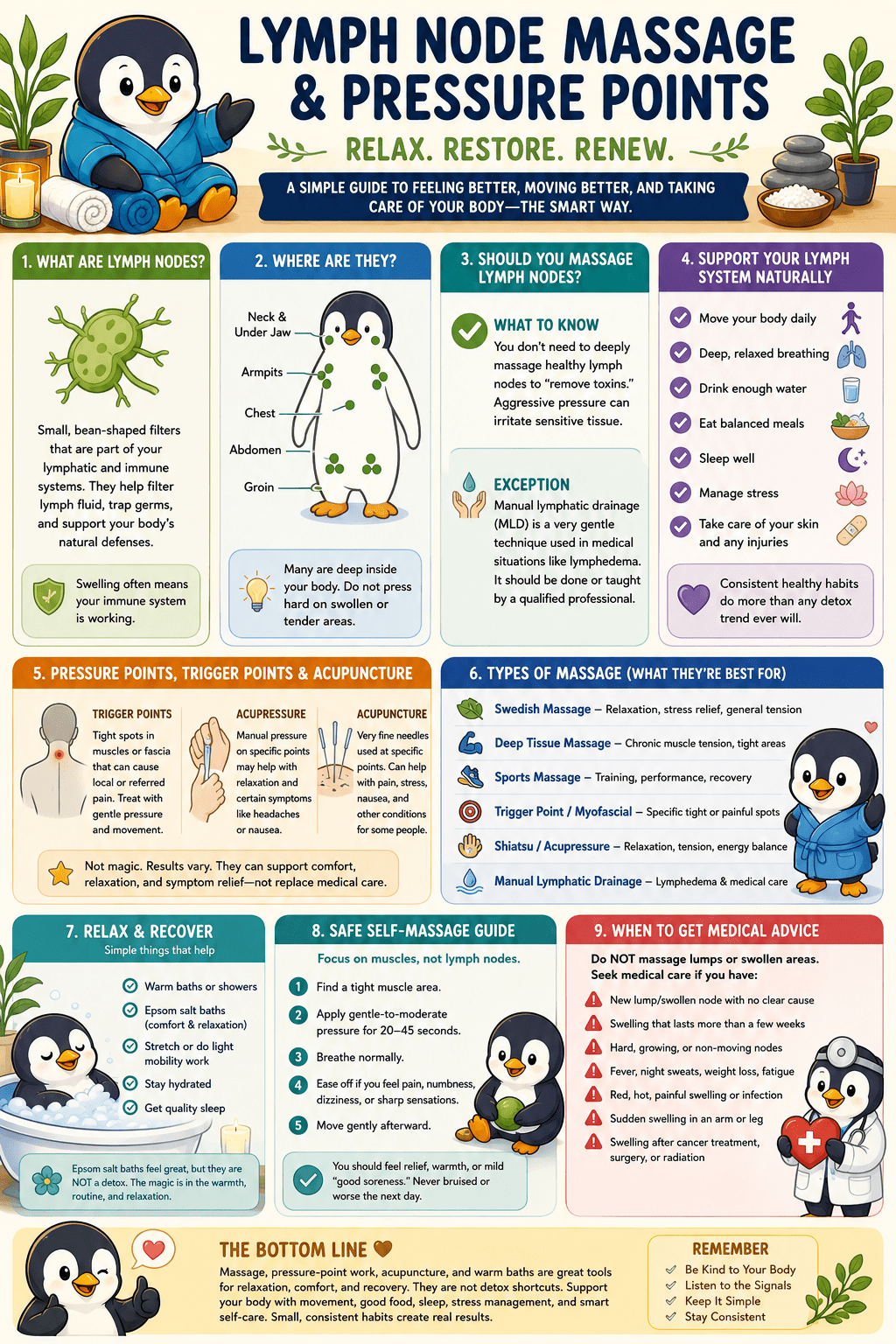
Your lymphatic system is part of your body’s normal maintenance crew. It includes lymph vessels, lymph nodes, the spleen, tonsils, bone marrow, and other tissues that help manage fluid and support immune function. Lymph is a clear fluid that moves through this system, carrying immune cells, excess fluid, and materials from body tissues.
Lymph nodes are small, bean-shaped filters located along that network. They contain immune cells that help recognize and respond to bacteria, viruses, abnormal cells, and other substances moving through lymphatic fluid. You have hundreds of them throughout your body, although most people only notice them when they become swollen during an illness.
That swelling is often a sign that your immune system is doing its job. A sore throat, cold, dental infection, skin infection, or other illness can cause lymph nodes in the neck, jaw, armpit, or groin to become more noticeable. That is not a cue to start pressing or digging into them. It is usually a cue to pay attention to the underlying reason they may be enlarged.
Your liver, kidneys, lungs, digestive system, and skin already handle the body’s normal waste-processing work. Massage may make you feel lighter, calmer, or less stiff, but it does not manually squeeze “toxins” out through your lymph nodes.
Where Lymph Nodes Are Commonly Found
You do not need to memorize every lymph node in the body, but knowing the main clusters can help you understand why certain areas become tender when you are sick.
The most commonly noticed areas include:
- Neck and under the jaw: Often noticeable with throat, sinus, ear, or dental infections.
- Armpits: Can react to infections or irritation in the arm, hand, chest, or breast area.
- Groin: Can react to issues involving the legs, feet, lower abdomen, or genital area.
- Chest and abdomen: These contain many lymph nodes, but you generally cannot feel them from outside the body.
Think of these locations as anatomy awareness, not massage targets. Pressing hard into your neck, armpits, or groin is not a healthy shortcut to better immunity or detoxification.
Should You Massage Your Lymph Nodes?
For a generally healthy person, there is no good reason to deeply rub, knead, poke, or aggressively press on lymph nodes. That can irritate sensitive tissue, make you more anxious about normal body sensations, and distract you from the actual cause of swelling or discomfort.
The important exception is manual lymphatic drainage, often called MLD. This is a specialized style of very gentle skin-level massage used to help move lymph fluid in people who have lymphedema or are at risk of it after certain surgeries, radiation treatments, injuries, or medical conditions. It is not deep tissue massage. In fact, a real lymphatic drainage technique is typically lighter than most people expect.
Manual lymphatic drainage is usually part of a larger treatment plan that may include compression garments, movement, skin care, and medical follow-up. Someone with diagnosed lymphedema should not copy random social-media techniques and hope for the best. A qualified lymphedema therapist can teach safe self-care based on the person’s specific body area, medical history, and condition.
A good rule is this: massage the muscles that feel tense, not the lymph nodes you think might be “blocked.”
What Helps Support Normal Lymphatic Function?
The lymphatic system works best when the whole body is moving and functioning normally. You do not need special gadgets, extreme cleanses, or painful massage sessions to support it.
Regular walking, strength training, mobility work, and normal daily movement all help because muscle contractions assist fluid movement through the body. Deep, relaxed breathing can also be useful because the diaphragm moves as you breathe and affects pressure within the chest and abdomen.
Basic health habits are not glamorous, but they matter more than expensive detox treatments:
- Move your body most days, even if it is just a walk.
- Break up long periods of sitting.
- Drink enough fluids for your activity level and climate.
- Eat a generally balanced diet with protein, fibre, fruits, vegetables, and minimally processed foods.
- Get enough sleep.
- Manage cuts, insect bites, and skin irritation properly, especially if you have a history of lymphedema.
That is boring compared with a flashy massage reel, but boring basics are where real results usually live.
Pressure Points, Trigger Points, and Acupuncture Points Are Different Things
The phrase “pressure point” gets used loosely. Sometimes people mean a tender muscle knot. Sometimes they mean a point used in acupressure. Other times they mean a spot that is simply sensitive because of posture, overuse, or stress.
A trigger point is a sensitive spot in a muscle or connective tissue that may reproduce pain when pressed. For example, a tight upper-trapezius muscle near the top of the shoulder can create an aching sensation that travels toward the neck or head. That does not mean the spot contains toxins. It usually means the tissue is irritated, overloaded, guarded, or simply tight.
Acupuncture points come from traditional Chinese medicine. Acupuncture uses very fine needles placed at specific points, while acupressure uses manual pressure instead of needles. Some people find these approaches helpful for relaxation or symptom relief, but the science is condition-specific. That means acupuncture may be useful for some problems, such as certain headaches, nausea, or chronic pain conditions, without being a universal answer for every health concern.
The helpful middle ground is to stay curious without becoming gullible. You do not need to believe that every point controls a specific organ in order to benefit from a calm, skilled treatment that reduces tension and helps you slow down.
A Safe Way to Try Gentle Self-Massage
Self-massage can be a great tool when you keep it simple. The goal is not to hurt yourself into feeling better. The goal is to reduce muscle guarding, improve comfort, and create a few minutes of focused recovery.
Start with areas that commonly hold tension: the tops of the shoulders, upper back, forearms, calves, hands, feet, and the muscles beside the spine. Use your fingers, a massage ball against a wall, or a foam roller. Work slowly and avoid pressing directly on the front or sides of the neck, swollen lumps, joints, varicose veins, bruises, or injured areas.
Use this basic guideline:
- Find a tight muscle area, not a lymph node or sharp painful spot.
- Apply gentle-to-moderate pressure for 20 to 45 seconds.
- Breathe normally rather than holding your breath.
- Reduce the pressure if you tense up, feel numbness, tingling, dizziness, or sharp pain.
- Follow with light movement, such as shoulder circles, walking, or easy stretching.
You should feel relief, warmth, or a mild “good soreness” afterward. You should not feel bruised, inflamed, weak, or worse the next day.
Different Types of Massage and What They Are Best For
Massage is not one single thing. The right style depends on what you are trying to get out of it.
Swedish Massage
Swedish massage is usually the best starting point for relaxation. It often uses broad, flowing strokes and moderate pressure. It can be a good option when stress, general tension, poor sleep, or a busy mind are the main problem.
Deep Tissue Massage
Deep tissue massage uses slower, firmer work on deeper muscle layers. It may feel helpful for some areas of long-standing muscular tightness, but harder is not automatically better. A deep tissue session should not leave you badly bruised or unable to move normally for days.
Sports Massage
Sports massage is typically geared toward training, exercise, and recovery. It may involve a mix of massage, mobility work, and attention to the muscles you use most in your activity. It can be useful for people who lift weights, run, cycle, play sports, or do physical work.
Trigger-Point or Myofascial Work
This style focuses more directly on sensitive muscle areas and connective tissue. It can be useful when you have a familiar tight spot, such as a shoulder knot from desk work or a tender calf after a hard workout. It should still be gradual and controlled, not an all-out pain contest.
Shiatsu and Acupressure
Shiatsu and acupressure use hands, thumbs, and palms to apply pressure in specific patterns. Many people enjoy them because they combine bodywork with a slower, calmer experience. They may be worth trying for relaxation or minor tension, but do not treat them as a substitute for medical care.
Manual Lymphatic Drainage
Manual lymphatic drainage is the most medically specific type on this list. It is gentle, specialized, and usually used for diagnosed lymphatic swelling or recovery plans directed by a health professional. It is not the same as a spa massage labelled “lymph detox.”
What About Infrared Heat Maps and Heated Massage?
The warm-colour images in massage videos can look convincing, but they are easy to overinterpret. A thermal image mainly shows differences in skin temperature. Warm areas may reflect circulation near the skin, contact pressure, room temperature, exercise, inflammation, or simply the warmth of a person’s hands.
That does not mean a red area is full of toxins, a blue area is blocked, or a numbered dot reveals a secret healing point. Infrared imaging has legitimate uses in some settings, but an Instagram massage video is not a medical scan.
Heat itself can still feel great. A heating pad, warm shower, bath, or massage can relax tense muscles and make movement feel easier. Just treat heat as a comfort tool, not a diagnosis tool.
Epsom Salt Baths: Relaxing, Yes. Detoxing, No.
An Epsom salt bath can be a solid part of a recovery evening. The warm water can loosen stiff muscles, help you slow down, and create a useful transition from a busy day into sleep. The ritual matters too: dim lights, calm music, less screen time, and fifteen quiet minutes can make a bigger difference than people expect.
Epsom salt is magnesium sulfate, but there is not strong evidence that soaking in it delivers enough magnesium through the skin to create a major physical effect. The bath may still feel good, but it is better to credit the warmth, rest, routine, and comfort than promise a detox or dramatic mineral treatment.
Keep baths comfortably warm rather than very hot, especially if you are prone to dizziness. Follow the product directions, avoid heavily fragranced products if your skin is sensitive, and moisturize afterward if baths tend to dry out your skin. A plain warm bath is perfectly fine too.
When You Should Not Massage a Lump or Swollen Area
Massage is not the right answer for every ache, lump, or swollen area. Do not try to “break up” a swollen lymph node or push fluid out of an unexplained swelling.
Get medical advice instead if you notice:
- A new lump or swollen lymph node with no clear cause.
- A node that keeps growing, feels hard, rubbery, or does not move easily.
- Swollen nodes lasting more than a few weeks.
- Fever, night sweats, unexplained weight loss, or unusual fatigue.
- Red, hot, painful swelling or signs of infection.
- Sudden swelling in one arm or leg.
- Shortness of breath, chest pain, trouble swallowing, or trouble breathing.
- Swelling after cancer treatment, lymph-node removal, radiation, or major surgery.
This is not meant to scare you. Most swollen lymph nodes are related to ordinary infections and settle down. The point is that a swollen node is information from your body, not a spot to attack with your thumbs.
A Better Recovery Routine for Real Life
Instead of chasing a complicated detox routine, build a simple one you will actually use. A good recovery night can be as basic as ten minutes of easy movement, a few minutes of gentle self-massage on tight muscles, a warm shower or bath, and an earlier bedtime.
Try this once or twice per week:
- Take a 10-minute walk or do light mobility work.
- Spend 3 to 5 minutes gently massaging tight muscle areas.
- Use a warm bath, shower, heating pad, or Epsom salt soak for comfort.
- Drink water, eat a normal balanced meal, and skip the “cleanse” products.
- Finish with low lights and less phone time before bed.
That routine will not perform miracles overnight. What it can do is help you feel more relaxed, more in tune with your body, and more consistent with recovery habits that support your training and daily life.
Final Takeaway
Massage, pressure-point work, acupuncture, and warm baths all have a place in a practical wellness routine. The key is using them for what they can realistically do: ease tension, encourage relaxation, support comfort, and give you a better chance of moving well and sleeping well.
Lymph nodes are important immune-system structures, but they are not toxin storage containers that need aggressive massage. Treat unexplained swelling seriously, keep self-massage focused on muscles rather than lumps, and use recovery rituals because they make you feel better—not because someone online promised they would cleanse your entire body.
The simple stuff still wins: move regularly, sleep enough, eat well most of the time, manage stress, and use massage or a warm bath as a helpful bonus. That is a much stronger wellness plan than chasing the latest “detox” trend.
Related External Links
- National Cancer Institute: Lymphedema and Cancer — Explains lymphedema and how manual lymphatic drainage fits into professional treatment.
- NCCIH: Acupuncture Effectiveness and Safety — Reviews what research says about acupuncture for pain, headaches, nausea, and other health concerns.
I would have sworn massaging the lymph nodes on your lower cheeks helped to loosen up trapped toxins. Guess it’s false. Exercising your facial muscles on the other hand I know is good stuff.