
Modern Health Hacks That Actually Make a Noticeable Difference
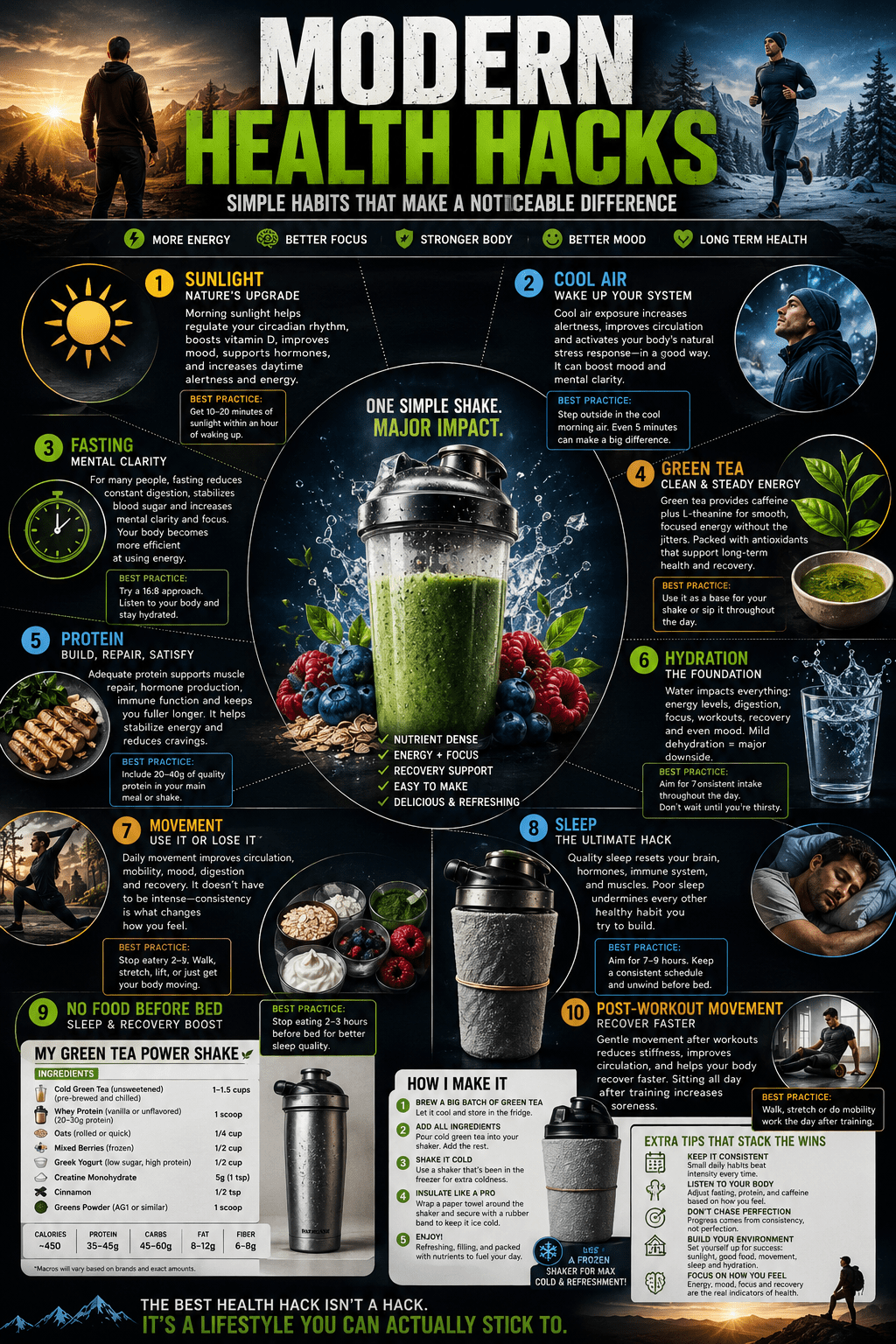
Most people spend years searching for some dramatic breakthrough that will suddenly make them healthier, more energetic, more disciplined, and more productive. The strange thing is that many of the biggest improvements people notice in real life often come from surprisingly small habits. Not flashy “biohacking” gadgets. Not celebrity supplements. Not miracle detoxes. Usually it is basic things that humans have quietly known for generations: movement, sunlight, hydration, protein, sleep, cold air, and routines that reduce friction.
The modern world has created a strange situation where people are simultaneously overstimulated and physically under-stimulated. Many people sit indoors all day under artificial lighting, barely move, sleep poorly, snack constantly, and wonder why they feel mentally foggy and physically sluggish. Then spring arrives, people start walking outside more, getting sunlight again, breathing cool fresh air, drinking more water, and suddenly they begin feeling “more alive” without fully understanding why.
That is where modern health hacks become interesting. Not because they are magical, but because small biological advantages compound over time. A better morning routine can improve energy. Better hydration can improve workouts. Walking outside can improve mood. Avoiding massive meals late at night can improve sleep quality dramatically. None of these things sound exciting individually, yet together they can completely change how a person feels.
One of the biggest misconceptions in fitness culture is the idea that health improvements only come from suffering. In reality, many noticeable improvements come from reducing friction inside the body rather than constantly pushing harder. Better circulation, steadier energy, reduced inflammation, improved digestion, and more consistent sleep often create more noticeable day-to-day improvements than extreme workout plans.
Early each morning, more people are experimenting with simple routines that combine sunlight, movement, caffeine, hydration, and protein. The appeal is obvious: people are desperate for stable energy in a world that constantly drains attention.
Before diving deeper into these health habits, it helps to visualize the kinds of simple routines many people are quietly returning to.


Why Small Health Habits Fascinate People Again
Part of the reason these health hacks are exploding online is because people are increasingly skeptical of overcomplicated wellness culture. After years of hearing about expensive powders, complicated supplement stacks, and extreme optimization routines, many people are rediscovering that basic physical habits genuinely affect mood, energy, focus, and recovery.
Take sunlight, for example. During winter, many people feel mentally slower, less motivated, and more tired. Then warmer months arrive and suddenly they begin spending more time outdoors. Their sleep improves. Their energy improves. Their mood improves. Some of this is psychological, but a significant portion is biological. Sunlight affects circadian rhythm, vitamin D production, hormones, and sleep quality in ways people often underestimate.
The same pattern appears with movement. People who sit still too long often feel physically worse, yet after a short walk they suddenly feel clearer mentally. The body appears designed for regular movement, circulation, and environmental exposure. Modern lifestyles frequently interrupt those systems.
This is also why “health hacks” tend to spread so rapidly online. When people experience a real improvement themselves, they become fascinated by it. A person drinks more water for a week and headaches disappear. Another starts walking after dinner and sleeps better. Someone begins fasting and notices stronger mental focus. These are not necessarily miracles. They are often the body returning closer to its normal operating conditions.
The Strange Power of Morning Sunlight and Cool Air
One of the simplest but most underrated health habits is stepping outside early in the day. The combination of cool air and natural light seems to wake up the nervous system in a way artificial indoor environments rarely replicate. Many people describe feeling more alert after just a few minutes outside, especially during colder seasons.
Cool air exposure is particularly interesting because it appears to increase alertness and circulation. Even a brisk walk outdoors during chilly weather can create a noticeable “wake-up” effect. Some researchers believe mild cold exposure activates stress-response systems in a beneficial way when exposure is controlled and moderate. This may partially explain why people often feel strangely energized after walking outdoors in colder temperatures.
There is also a psychological element. Modern indoor life can feel stagnant. Fresh air creates sensory stimulation that the body may interpret as movement, activity, and environmental engagement. People often report reduced mental fog after spending time outdoors, even briefly.
Some people also enjoy tanning during winter months because the heat and light create a temporary mood boost. This is understandable psychologically. Warmth relaxes muscles, increases circulation, and can feel deeply comforting during long cold winters. However, tanning beds remain controversial because excessive UV exposure is associated with skin aging and skin cancer risk. This is one of those areas where moderation and awareness matter. Feeling good short term does not necessarily mean something is healthy long term.
Why Fasting Makes Some People Feel Mentally Sharp
Fasting has become one of the most debated health trends of the last decade. Some people swear it improves their focus, energy, and productivity. Others try it once and feel miserable. The truth probably lies somewhere in the middle.
Many people report increased mental clarity while fasting because digestion itself requires energy. Large meals, especially heavy processed carbohydrate meals, can leave people feeling sluggish afterward. Blood sugar spikes followed by crashes may also contribute to fatigue and brain fog in some individuals.
Interestingly, humans likely evolved spending long periods without constant food access. Early humans probably needed to remain alert while hungry rather than becoming sleepy and useless. Some researchers believe this may partially explain why certain people feel mentally focused during fasting periods.
Coffee and green tea also play a role here. Caffeine suppresses fatigue signals while fasting may stabilize energy fluctuations for some individuals. Together, the combination can create a noticeable “locked in” mental state that many people describe as highly productive.
Still, fasting is not automatically healthy for everyone. Some people overdo it, under-eat protein, or create unsustainable routines that eventually backfire. The strongest approach is usually moderate and realistic rather than extreme.
Green Tea, Coffee, and the Energy Question
The battle between coffee and green tea has become a permanent internet debate. Coffee tends to hit harder and faster. Green tea feels gentler and steadier. Interestingly, many people eventually discover they prefer different caffeine sources for different situations.
Black coffee is effective largely because it works quickly. It increases alertness, reaction time, and perceived energy. Combined with something simple like eggs or protein, it can create a surprisingly stable morning routine. A hard-boiled egg and black coffee may sound boring, but the combination of caffeine, protein, and fats can help some people avoid the dramatic crashes associated with sugary breakfasts.
Green tea is different. Many people describe it as “cleaner” energy. This may partially relate to compounds like L-theanine, which appears to smooth out caffeine stimulation for some individuals. Green tea also contains antioxidants that supporters associate with long-term health benefits.
One particularly interesting approach is using cold green tea as the base for a protein shake. The cold temperature makes it refreshing while the caffeine provides subtle stimulation. Combined with oats, berries, whey protein, cinnamon, Greek yogurt, creatine, and greens powder, the result becomes less of a “fitness shake” and more of a portable nutrition system.
The shake itself is interesting because it combines multiple useful elements:
- Protein for recovery and fullness
- Oats for slower carbohydrates
- Berries for fiber and antioxidants
- Green tea for caffeine and hydration
- Greek yogurt for texture and probiotics
- Cinnamon for flavor and possible blood sugar support
- Creatine for strength and recovery
- Greens powder for micronutrient support
The preparation routine itself also matters more than people think. Making a large batch of green tea ahead of time removes friction. Keeping the shaker cold in the freezer makes the drink more enjoyable. These small routine optimizations are often what determine whether habits actually stick long term.
Why Hydration Quietly Changes Everything
Hydration is one of the least glamorous health topics online because it feels too simple. Yet dehydration quietly affects almost everything: energy, mood, workouts, circulation, concentration, headaches, digestion, and recovery.
A surprising number of people walk around mildly dehydrated most of the time. Then they drink water consistently for several days and suddenly feel noticeably better. This is not because water is some magical substance. It is because the body functions poorly without enough fluid.
Hydration becomes even more important during exercise, fasting, caffeine use, and warmer weather. Muscles recover poorly without proper hydration. Energy levels drop faster. Soreness often feels worse. Even flexibility and mobility may decline.
This becomes very noticeable after workouts. People often assume soreness is entirely caused by exercise itself, but stiffness can worsen dramatically when recovery habits are poor. Stretching, movement, hydration, and circulation all appear to help the body recover more efficiently.
Movement Might Matter More Than Intensity
Modern fitness culture often glorifies destruction. Exhaust yourself. Crush your workout. Leave the gym barely able to move. While intense training absolutely has benefits, many people eventually discover that recovery habits determine how sustainable fitness actually becomes.
One of the worst feelings is post-workout stiffness after remaining inactive too long. The body tightens up. Legs feel heavy. Mobility disappears. Ironically, gentle movement often improves soreness faster than complete inactivity.
Walking, stretching, mobility work, and light movement increase circulation and help muscles loosen up. This is why athletes often emphasize active recovery rather than lying still for days after training.
The same principle applies mentally. People frequently feel better after movement because movement signals activity to the nervous system. Long sedentary periods seem to amplify fatigue and stiffness both physically and mentally.
This may explain why simple habits like walking outside can produce effects that feel disproportionately powerful relative to how simple they are.
The Huge Sleep Mistake Many People Ignore
One of the most noticeable health hacks is simply avoiding heavy meals immediately before bed. Many people underestimate how strongly digestion interferes with sleep quality.
Eating large meals late at night may increase body temperature, digestion activity, acid reflux risk, and sleep disruption. People often wake up feeling groggy not necessarily because they slept too little, but because sleep quality itself was poor.
Some people notice dramatic improvements by creating a few hours of separation between their final meal and bedtime. This does not mean everyone needs extreme fasting windows. It simply means the body may recover more effectively when digestion slows down before sleep begins.
Sleep itself remains the ultimate “health hack” that nobody wants to hear about because it lacks excitement. Yet almost every system in the body improves when sleep quality improves: hormone regulation, recovery, mood, focus, appetite control, and physical performance.
Why These Health Hacks Matter Right Now
The reason these habits are resonating so strongly today is because modern life increasingly pulls people away from natural physical rhythms. Artificial lighting, constant stimulation, processed foods, inactivity, stress, and poor sleep all stack together quietly over time.
People are beginning to rediscover that feeling healthy is not always about becoming superhuman. Often it is about removing the things that constantly make the body feel worse.
That is why simple habits feel so powerful once they start compounding:
- Better sleep improves energy
- Better energy improves workouts
- Better workouts improve mood
- Better mood improves discipline
- Better routines reduce stress
Small wins build momentum.
This is also why grounded health advice tends to outperform exaggerated wellness claims long term. People eventually realize that sustainable habits beat dramatic transformations almost every time.
Final Verdict
Modern health hacks are fascinating because many of them are not really “hacks” at all. They are often basic biological habits that modern lifestyles slowly pushed aside. Sunlight, hydration, movement, protein, recovery, sleep, fresh air, and stable energy routines may sound boring compared to futuristic wellness trends, but they consistently appear in the routines of people who genuinely feel healthy long term.
The key difference is consistency. Drinking one healthy shake changes very little. Walking outside once changes very little. Sleeping properly for one night changes very little. But when these habits begin stacking together daily, people often notice surprisingly large improvements in energy, mood, focus, soreness, and overall quality of life.
Perhaps the biggest lesson is that the body frequently responds better to stability than extremes. Many people are not broken. They are simply disconnected from basic physical habits that humans relied on for thousands of years.
And honestly, sometimes the “health hack” is not complicated at all. Sometimes it is just an ice-cold green tea shake in a frozen metal shaker, a walk outside in cool air, stretching sore legs before bed, drinking more water, and slowly building routines that make the body feel alive again.
Good ideas here, I gotta start drinking my shakes daily. The Greek yogurt is also a great source of protein 🙂